
Hyperpigmentation Treatment Scottsdale
Uneven Skin Tone Isn’t a Surface Problem. It Starts at the Cell Level.
What’s Actually Causing Your Pigmentation
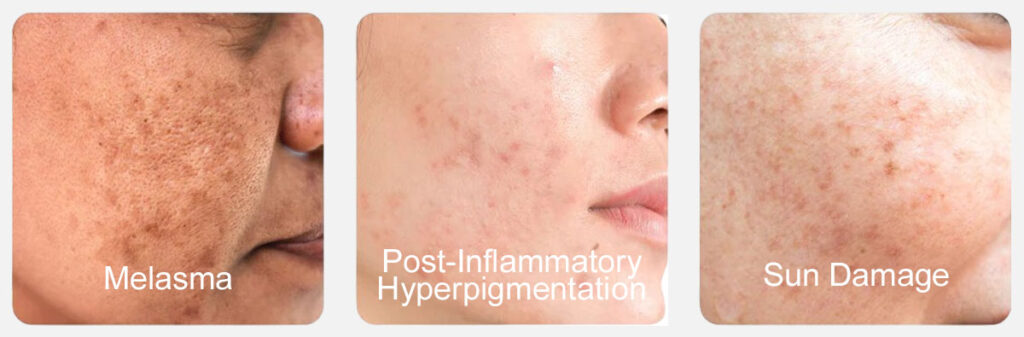
Not all hyperpigmentation is the same, and the distinction matters clinically. The right treatment depends on which biological mechanism is driving the excess melanin.
- Sun damage and photoaging (solar lentigines). Cumulative UV exposure overstimulates melanocytes and breaks down the skin’s connective architecture over time. The result is the flat, localized brown patches commonly called sun spots or age spots, concentrated areas of melanin that have been deposited unevenly. Effective treatment requires both breaking up existing pigment clusters and downregulating the overactive cells producing them.
- Melasma. Melasma is driven by a combination of estrogen, progesterone, and UV exposure, which is why it’s so common during pregnancy and in women on hormonal contraceptives, and why it tends to worsen in sun. Melasma presents as symmetrical, often clustered blotchy patches on the cheeks, forehead, and upper lip. Because it’s rooted in systemic biology and the melanocytes remain in a persistently reactive state, melasma requires a fundamentally different approach than sun spots. High heat is contraindicated; it can trigger exactly the inflammatory response that makes melasma worse.
- Post-inflammatory hyperpigmentation (PIH). This is pigmentation that develops after injury or inflammation, commonly a severe breakout, an aggressive treatment, or a physical trauma. Acne is the most common trigger, leaving dark marks that persist long after the blemish has healed. PIH is particularly sensitive to further inflammation, which means the treatment approach needs to be precise and measured. Aggressive intervention can restart the inflammatory cycle and deepen the discoloration.
How We Treat Hyperpigmentation at Rejuvience
Our approach to pigmentation correction is regenerative rather than ablative. Rather than stripping or bleaching the surface, we use targeted technologies to accelerate cellular turnover, disrupt excess melanin at the source, and support the skin’s natural renewal mechanisms. The right combination depends on your specific pigmentation type, skin tone, and tissue history.
Procell Microchanneling & Exosome Treatment for Hyperpigmentation
For comprehensive skin tone correction paired with an overall skin texture improvement, this biological approach stands out for its precision.
- The Mechanism: Procell Microchanneling creates thousands of clean, vertical micro-channels in the epidermis to activate a natural healing cascade. We immediately follow this step by flooding the skin with an exosome treatment for hyperpigmentation derived from clinical-grade stem cell growth factors.
- The Target: Intensive exosome therapy acts as an advanced cellular communicator, instructing cells to function more youthfully, speed up skin renewal, and support healthy melanin regulation to effectively reduce the appearance of dark spots.

Procell Microchanneling creates thousands of clean, uniform vertical micro-channels in the skin using a stamping, not rolling, motion. Applied immediately after, clinical-grade exosome serums and stem cell growth factors travel directly into those open channels, delivering regenerative signals well past the barrier that normally limits topical penetration.
We use AnteAGE MDX Exosome Brightening Solution, which pairs stem-cell-derived exosomes with an 8.5% Tranexamic Acid complex, a tyrosinase inhibitor that interrupts the enzymatic pathway responsible for melanin production. The combined effect is accelerated cellular renewal, healthier melanin regulation, and a measurable improvement in overall skin tone.
This is particularly effective for PIH and sun-induced pigmentation, and it is one of the more conservative options for melasma-prone skin.
Venus Viva Nano-Fractional Skin Resurfacing
For deep-seated solar lentigines, stubborn texture, and old acne discoloration.
- The Mechanism: Venus Viva skin resurfacing utilizes nano-fractional radiofrequency pins to send targeted thermal energy deep into the dermal layers.
- The Target: By swapping out damaged cells with fresh, unblemished tissue, it corrects both pigmentation and skin texture without the significant downtime or structural heat risks associated with ablative lasers.
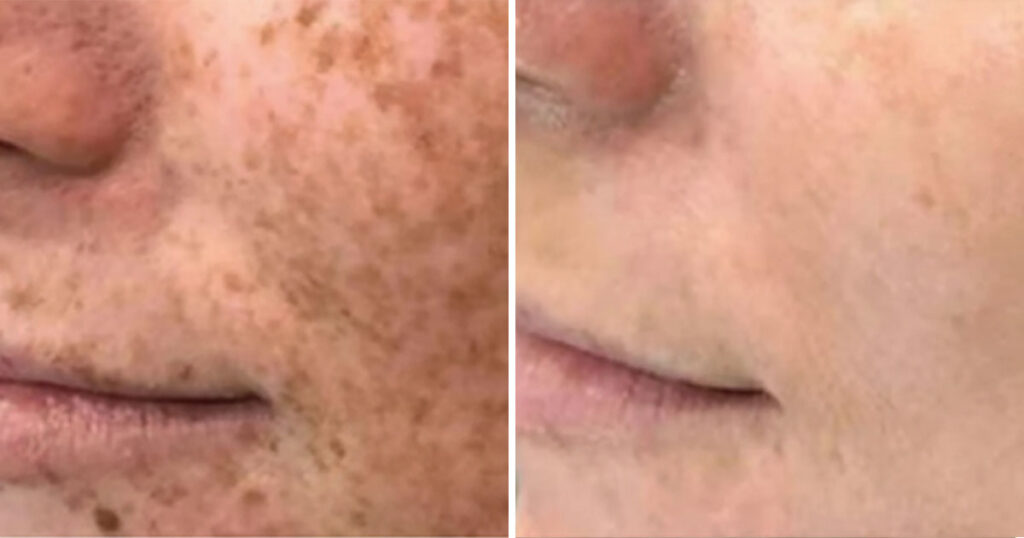
When pigmentation is deeply embedded, old sun damage, longstanding acne discoloration, textural irregularity alongside the pigment, Venus Viva provides a level of structural remodeling that surface-level approaches can’t reach.
It delivers nano-fractional radiofrequency energy through a grid of tiny pins, creating microscopic thermal zones that replace damaged, pigmented cells with fresh tissue. Because it uses radiofrequency rather than light energy, it bypasses the melanin absorption pathway that makes traditional lasers a poor choice for medium and darker skin tones, and for melasma, where heat-induced inflammation can cause rebound darkening.
Not recommended as a standalone treatment for active melasma. Best used as part of a sequenced protocol once the condition is stabilized.
Tixel Thermal Skin Resurfacing
For superficial brown spots, age spots, and pigmentation with a texture component.
- The Mechanism: The Tixel uses a heated titanium tip to briefly touch the skin, skipping the light radiation entirely.
- The Target: It purges superficial brown spots and age spots by triggering rapid cellular turnover, while simultaneously inducing collagen stimulation for a firmer, more radiant complexion.

Tixel delivers controlled thermal energy through a heated titanium tip in milliseconds, no laser radiation, no radiofrequency. The brief heat contact triggers rapid cellular turnover, purging superficial pigmented cells while simultaneously stimulating collagen remodeling in the tissue below.
It’s well-suited for surface sun spots and photoaging with mild texture irregularity, and its precision makes it safe in delicate zones like the periorbital area. Downtime is typically one to two days of mild pinkness.
Like Venus Viva, Tixel should be used with caution in active melasma; heat-based treatments require careful patient selection and timing in hormonally driven pigmentation.
Clinical Microneedling & High-Performance Bioactives
For disrupting melanin clusters and enhancing delivery of pigment-regulating actives.
- The Mechanism: Traditional microneedling serves as an exceptional mechanical tool to disrupt dense pools of facial pigmentation and encourage fresh skin regeneration.
- The Target: By creating clean delivery pathways, microneedling enhances the absorption of advanced clinical bioactives. True pigment control relies heavily on everyday home care featuring tyrosinase inhibitors, specialized ingredients that block the enzyme responsible for creating melanin.
Traditional medical microneedling disrupts dense pools of excess melanin mechanically, accelerates cellular turnover, and creates delivery channels for topical bioactives that significantly improve their clinical effect.
Paired with tyrosinase-inhibiting ingredient Tranexamic Acid and targeted brightening complexes, microneedling addresses both the structural pigment deposit and the cellular pathway producing it.
This combination is particularly effective for PIH and diffuse sun damage where surface turnover is the primary goal.
What Lasting Results Actually Require
In-office treatments do the heavy lifting, but they can’t outrun daily UV exposure or ongoing hormonal triggers. Real pigmentation correction is a two-part commitment:
- Daily defense. A high-quality physical mineral sunscreen, applied consistently, is non-negotiable. For melasma in particular, even brief unprotected UV exposure can undo weeks of treatment progress.
- Home-care actives. Tyrosinase inhibitors used daily — Tranexamic Acid, Azelaic Acid, Vitamin C — work between treatment sessions to keep melanocyte activity in check and extend your clinical results.
We’ll build both into your protocol from the start.
Is This Right for You?
Because hyperpigmentation presents differently based on its root cause, your skin tone, and your history of prior treatments, there’s no universal protocol. Treating melasma the same way as sun spots, or using high heat on skin prone to PIH, can make the problem significantly worse.
Your complimentary consultation is where we look at your specific pigmentation pattern, assess your barrier integrity, and design a treatment path matched to your biology. No cost. No obligation. Just an honest assessment.
FAQs: Hyperpigmentation Treatment Scottsdale
How can I get rid of hyperpigmentation safely without making it worse?
True pigmentation correction requires a strategic, non-aggressive approach. Aggressive heat lasers or overly deep chemical peels can traumatize the skin, triggering defensive melanocyte activity and worsening your spots. Our focused regenerative pigmentation treatment methods, such as Procell Microchanneling with exosomes and Tixel thermal energy, safely clear surface pigment and stimulate skin renewal and repair without triggering a rebound inflammatory response.
Why is melasma so much harder to fade than standard sun spots?
Unlike basic sun spots caused purely by past UV exposure, melasma is a dynamic, vascular, and hormone-driven condition. The pigment cells remain in a constantly hyper-reactive state. Treating it successfully means avoiding high heat and instead using cool, cellular-level therapies like exosome therapy paired with daily tyrosinase inhibitors (such as Tranexamic acid and Azelaic acid) to gently improve the appearance of melasma and sun spots from the inside out.
How many treatments are required to see a radiant complexion?
Skin regenerates in cycles, so significant tone correction develops progressively. A subtle improvement in luminosity can appear within weeks of an exosome therapy session. Meaningful clearance of deeper pigmented lesions or solar lentigines typically requires a series of three to six treatments, spaced approximately four weeks apart. We’ll give you an honest timeline at your consultation based on what we actually see.
Is Procell Microchanneling safe for post-inflammatory hyperpigmentation after acne?
Yes. Traditional mechanical microneedling and Procell Microchanneling are highly effective for fading stubborn acne marks. Because Procell uses a clean, vertical stamping motion rather than a dragging rolling action, it delivers uniform controlled micro-injuries that break up lingering acne discoloration and accelerate cellular turnover without irritating the surrounding tissue.
Why does Rejuvience require a consultation for all dark spot treatments?
Because treating pigmentation incorrectly can cause permanent skin damage or deepened discoloration, we never use a one-size-fits-all approach. During your complimentary, no-obligation evaluation at our Scottsdale location, we will closely examine your skin’s history, evaluate your barrier integrity, and map out a precise path to restore brighter, more even-looking skin.