
Sun Damage Treatment Scottsdale
Reverse Sun Damage. Restore What UV Has Taken.
If you’ve lived in Arizona for more than a decade or spent summers roasting in the sun coated in baby oil, your skin has a story to tell, and most of it is written in UV exposure. The brown spots. The roughness. The crepe. That’s photodamage, which is the primary driver of premature skin aging.
Sun damage treatments at Rejuvience address your underlying skin biology: the damaged collagen matrix, the overactive pigment cells, the structural breakdown that UV radiation causes at the cellular level. Our approach is regenerative, which means we work with your skin’s repair mechanisms to undo the sun damage and deliver real age repair.
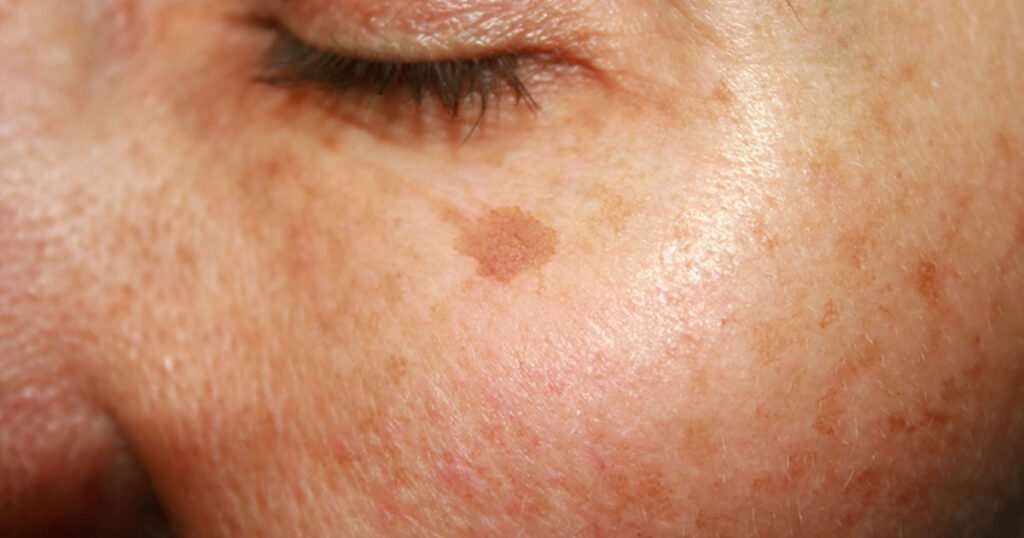
What Sun Damage Actually Does to Skin
Clinicians use the term photoaging to describe the cumulative effect of unprotected UV exposure on skin biology. It’s not one thing; it’s a cascade of changes happening across multiple tissue layers simultaneously.
- Pigment dysfunction. Chronic sun exposure overstimulates melanocytes, triggering excess melanin production that pools as flat, darker patches on your skin called sun spots, age spots, or liver spots. These often appear first on the left side of the face, the driver’s side, that is more often exposed to blazing sun.
- Textural breakdown. Years of UV exposure degrade the elastin fibers that keep skin supple and resilient, a process called solar elastosis. The result shows up on the surface: skin that feels rough or leathery to the touch, looks thin and translucent, and develops that characteristic crepey quality that no amount of moisturizer fully addresses. This is damage to the skin’s quality, reducing its thickness, resilience, and surface integrity.
- Structural Wrinkling. Unlike expression lines that form from repeated muscle movement, structural wrinkles are architectural. UV radiation breaks down the dermal collagen matrix over time, and as that scaffolding weakens, the skin can no longer hold its shape. The result is deeper folds, volume loss, and lines that are present even at rest, resulting in permanent changes to the skin’s form, not just its surface.
- Vascular Changes. Persistent redness, blotchiness, and uneven skin tone are often signs of chronic sun damage to the skin’s microvasculature. Years of UV exposure can weaken and dilate tiny blood vessels beneath the skin, creating visible redness and discoloration that gradually become more noticeable over time.
The good news is that modern regenerative treatments can fade unwanted pigmentation, improve skin quality, and visibly reverse many of the changes caused by years of sun exposure.
How We Treat Sun Damaged Skin at Rejuvience
The most important thing to understand about treating photodamage is this: one modality doesn’t fix all of it. Pigment dysfunction lives at the cellular level. Textural damage is structural. Vascular changes require their own approach. An effective protocol stacks the right technologies to reach the right depths for your unique skin condition and treatment goals. Here are the technologies we use, and why.
Venus Viva Nano-Fractional Radiofrequency Skin Resurfacing
When the damage goes deep, think coarse texture, pronounced wrinkling, skin that’s lost its structural integrity, fractional technology is the appropriate tool. Venus Viva skin resurfacing effectively addresses deep structural wrinkling, leathery skin, and severe textural damage.
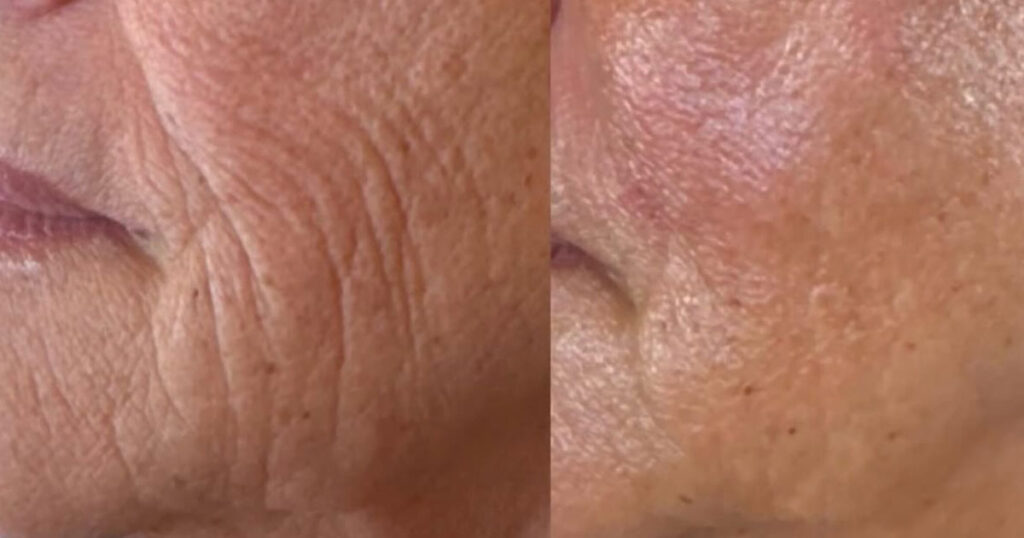
Venus Viva delivers nano-fractional radiofrequency energy through a grid of tiny pins, targeting the dermal layer where collagen lives. The controlled injury triggers a remodeling response: old, damaged matrix breaks down and new, organized collagen forms in its place.
The key distinction from traditional ablative lasers: Venus Viva doesn’t remove the surface of the skin. That means significantly less downtime, no weeping or raw skin, and none of the rebound hyperpigmentation risk that makes aggressive resurfacing a poor choice for many skin types, especially darker Fitzpatrick tones.
Tixel Thermo-Mechanical Skin Resurfacing
For surface brown spots, moderate laxity, and delicate treatment zones
Tixel uses a different energy source entirely: heat, applied through a titanium tip in a precise grid pattern. No laser radiation. No radiofrequency. Just controlled thermal energy delivered in milliseconds, enough to resurface the tissue and stimulate collagen remodeling without the risk profile of lasers.

The Tixel is particularly effective for lifting superficial age spots and tightening mild-to-moderate skin laxity. And because it’s so precise, we can safely treat areas that most devices avoid, including the periorbital zone around the eyes, where UV damage often concentrates early.
Exosome Therapy & Growth Factor Infusion
To actually reduce pigmentation, not just bleach the surface, you have to intervene at the level of the melanocyte. That’s what exosome therapy does.

We use the AnteAGE MDX Exosome Brightening Solution, a clinical-grade formulation that delivers concentrated stem-cell-derived exosomes and growth factors alongside an 8.5% Tranexamic Acid complex. Tranexamic Acid interrupts the internal chemical signals that trigger excess melanin production. The exosomes amplify cellular repair. Together, they quiet down the inflammation that drives pigment in the first place, which is why this protocol works for both photoaging and hormonal melasma.
This isn’t a brightening serum. It’s cellular-level intervention.
Procell Microchanneling & Microneedling
Mechanical biostimulation remains one of the most clinically validated tools we have for skin regeneration, and for sun-damaged skin on the face, neck, and chest, it’s often foundational to a good protocol for treating overall cellular renewal, thin dermis, and below-surface pigment.

Procell Microchanneling uses a clean stamping technique to create uniform vertical micro-channels in the skin. Paired with growth factor therapy, it thickens thinning dermis, addresses pigment below the surface, and accelerates the renewal process measurably.
Microneedling serves a slightly different purpose: it’s particularly effective for skin that has become ‘glycated’, meaning thickened and stiff from years of sun and sugar exposure. By mechanically breaking up old, disorganized collagen, it creates the conditions for a fresh, organized matrix to form.
Because photodamage presents differently based on your age, skin type, and history of exposure, there’s no universal protocol. The right combination of modalities depends on the depth of your pigment, the degree of structural damage, and your realistic downtime window.
That’s exactly what a complimentary consultation is for, an honest conversation about what your skin actually needs and what results are achievable with today’s advanced regenerative technologies.
FAQs
What are the primary signs of sun damage on the face?
The most common presentations are hyperpigmentation (sun spots, age spots, uneven tone), deep or fine wrinkles, crepey or rough skin texture, and facial redness or blotchiness. These reflect different types of UV-induced damage happening at different tissue depths, which is why effective treatment usually requires more than one modality.
Can sun damaged skin actually be reversed, or just managed?
Genuinely reversed, in most cases, though the degree of reversal depends on how long the damage has accumulated and how your skin responds to treatment. By combining structural resurfacing tools like Venus Viva and Tixel with regenerative therapies like exosomes and growth factors, we can accelerate cell turnover, stimulate new collagen, and clear brown spots in ways that weren’t possible even a decade ago.
Why regenerative treatments instead of aggressive lasers or deep peels?
Aggressive ablative lasers and deep chemical peels carry real risks: prolonged downtime, scarring, and, critically for our Arizona population, rebound hyperpigmentation, especially in medium and darker skin tones. Regenerative protocols achieve comparable results by working with the skin’s own repair mechanisms rather than traumatizing the surface. The tradeoff is that results build progressively over a series of treatments rather than dramatically after one aggressive session. For most people, that’s the right tradeoff.
How does the AnteAGE MDX Exosome solution work for pigmentation?
It delivers a high concentration of stem-cell-derived exosomes and growth factors alongside 8.5% Tranexamic Acid. The Tranexamic Acid interrupts the enzymatic pathways that trigger excess melanin production. The exosomes enhance cellular communication and repair. The combined effect is a reduction in the inflammatory signaling that drives both sun-induced pigmentation and hormonal melasma.
How do I get started?
Schedule a complimentary clinical assessment at our Scottsdale location. We’ll evaluate your degree of photodamage, discuss your goals and downtime tolerance, and build a personalized treatment path. No obligation.