
Scottsdale Regenerative Insider
Study: Antioxidants, Collagen, and Aging Skin
What This New Research Reveals About Skin Aging (and How to Slow It Down)
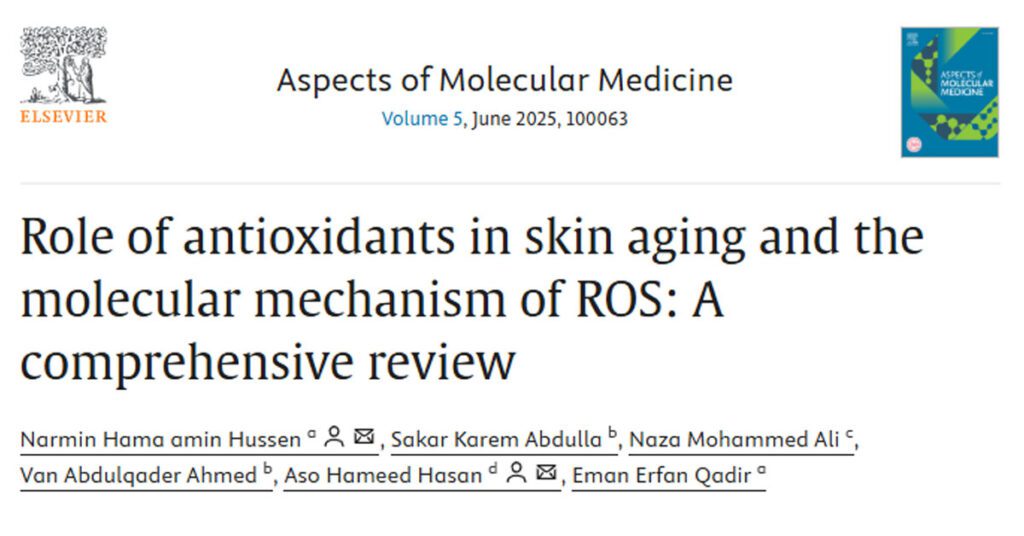
A 2025 comprehensive review published in Aspects of Molecular Medicine examines one of the most important drivers of skin aging: oxidative stress caused by reactive oxygen species (ROS) and what actually works to counter it.
The Real Cause of Skin Aging: It’s Not Just Time
The study confirms that skin aging is driven by both intrinsic factors (genetics, time) and extrinsic factors (UV exposure, pollution, smoking). What ties them together is oxidative stress.
When your skin is exposed to environmental stressors, especially UV radiation, it produces excess ROS (free radicals). These molecules damage:
- Collagen and elastin
- Cell membranes
- DNA within skin cells
This leads to visible aging signs like wrinkles, laxity, dryness, and uneven tone.
The Battle Against Oxidative Stress
Every day, your skin is under attack from “environmental aggressors” like UV radiation, pollution, and blue light. These forces create oxidative stress, which produces free radicals, unstable molecules that break down your collagen and cause wrinkles, sagging, and dark spots.
Antioxidants are your skin’s personal bodyguards. They neutralize these free radicals before they can do damage, keeping your skin’s integrity intact.
Meet Your Skin’s Superstars: Ingredients & Dietary Sources
The study outlines several key antioxidants that are essential for skin repair and longevity. Here is how you can incorporate them through both skincare and your diet.
| Antioxidant | Natural Source | Method of Application | Effect on Intrinsic Aging | Effect on Extrinsic Aging |
|---|---|---|---|---|
| Vitamin E | Almonds, sunflower seeds, spinach, avocado, olive oil, wheat germ oil | Topically (serum, cream) or orally | Antioxidant Protection; Moisture Retention; Prevention of Lipid Peroxidation; Cellular Repair | Photoprotection; Anti-inflammatory Properties; Reduction of Hyperpigmentation; Barrier Repair |
| Vitamin C | Citrus fruits, berries, kiwi, bell peppers, broccoli, spinach, tomatoes | Topically (serum and cream) | Collagen synthesis; Antioxidant protection; Reduction of fine lines | Reduction in Hyperpigmentation; Repair of Photoaging; Photoprotection |
| Coenzyme Q10 | Organ meats, fatty fish (salmon, sardines), spinach, oats, peanuts | Orally (supplement) and topically (serum and cream) | Boosts Cellular Energy; Prevents Collagen Breakdown; Improves Skin Renewal | UV Protection; Improves Skin Elasticity; Reduces fine lines; Reduces Environmental Damage |
| Carotenoids | Carrots, sweet potatoes, spinach, kale, tomatoes, peppers, mangoes | Dietary intake | Potent antioxidant; Maintains cell integrity; Collagen Preservation; Skin Repair and Regeneration | Protection against UV-induced stress; Inhibits excessive melanin; Strengthens skin barrier; Reduces Inflammation |
| Resveratrol | Red grapes, berries, peanuts, dark chocolate, Japanese knotweed | Orally (supplement) and topically (cream, serum) | Anti-inflammatory; Activates sirtuins for cellular repair; Collagen Preservation | Photoprotective and Anti-inflammatory; Reduces Hyperpigmentation; Prevents premature aging |
| Green Tea (Polyphenols) | Green tea, matcha, black tea, white tea, oolong tea | Orally (supplement) and topically (cream, serum) | Promotes skin health; Reduces natural aging effects; Antioxidant Protection; Collagen Preservation | UV Protection and Photoaging Prevention; Environmental Stress Protection; Reduces Pigmentation; Strengthens Skin Barrier |
| Flavonoids | Apples, berries, citrus fruits, onions, leafy greens, nuts, seeds, parsley, red wine | Topically (cream, serum) | Antioxidant and anti-inflammatory; Stimulates collagen synthesis; Preserves texture and resilience | Cell Repair; UV Protection; Protection Against Pollution and Environmental Damage; Strengthens Skin Barrier |
| Quercetin | Apples, onions, berries, green tea, dark chocolate, broccoli | Orally (supplement) and topically (cream, serum) | Inhibits collagenase and elastase; Reduction of Cellular Senescence (Senolytic agent) | Mitigates UV-induced oxidative stress; Reduces pigmentation; Anti-inflammatory; Enhances barrier function |
| Lipoic acid | Organ meats (liver, heart), spinach, broccoli, yeast, potatoes | Orally (supplement) and topically (serum and cream) | Collagen Preservation; Enhances energy production in mitochondria (metabolic activity) | Anti-inflammatory; UV Protection; Improves Skin Texture and Tone; Regenerates Vitamins C and E |
| Vitamin A | Carrots, sweet potatoes, liver, egg yolks, spinach, kale, red peppers | Topically (serum, cream) | Collagen Stimulation; Thickening of the Dermis; Reduction of Wrinkles; Cell Turnover | Repair of UV Damage; Smoothing of Photoaging Signs; Protection Against Free Radicals; Reduction of Hyperpigmentation |
| Niacinamide (B3) | Poultry, beef, tuna, peanuts, lentils, chickpeas, mushrooms, brown rice | Topical (serum, cream, and toner) | Boosts Collagen Production; Improves Skin Barrier Function; Supports Cellular Repair | Reduction of Pigmentation; Refines Skin Texture; Enhances Barrier Against Pollutants; Anti-inflammatory |
| Zinc | Seafood, beef, lamb, dairy, legumes, seeds, nuts, quinoa, oats | Topical (sunscreen) | Collagen Synthesis Support; Cellular Repair and Growth; Enhances immune defense | Antioxidant Activity; UV Protection; Wound Healing and Repair; Anti-inflammatory Properties |
Ready to learn how your skin can repair, strengthen, and renew?
Book a complimentary consultation and learn what’s possible with today’s advanced regenerative treatments. There’s no cost, and there’s never any pressure.
Scottsdale Regenerative Insider is the official blog of Rejuvience Med Spa. We believe in transparent, evidence-based aesthetics that utilize your body’s natural ability to heal and renew.
Get the Regenerative Edge! Receive our latest regenerative research and exclusive med spa offers directly to your inbox.
Clinical Source
Journal: Aspects of Molecular Medicine, Volume 5, 100063, June 2025
DOI URL: https://doi.org/10.1016/j.amolm.2025.100063
Publish Date: June 2025 (First published online January 2025)
Authors
Name: Nur Hayati amin Hussen
Affiliation: Medical Laboratory Science Department, College of Health Sciences,University of Human Development, Sulaymaniyah, Iraq
Profile: Google Scholar Profile
Professional Standing: Researcher specializing in Medical Laboratory Science and the molecular mechanisms of oxidative stress and antioxidants in human health.
Name: Shadi K. Abdulla
Affiliation: Medical Laboratory Science Department, College of Health Sciences, University of Human Development, Sulaymaniyah, Iraq
Profile: ORCID Profile
Professional Standing: Academic and researcher focusing on biochemistry and the molecular basis of disease prevention through nutrition and antioxidants.
Name: Nazdar M. Ali
Affiliation: Medical Laboratory Science Department, College of Health Sciences, University of Human Development, Sulaymaniyah, Iraq
Profile: University Faculty Profile
Professional Standing: Faculty member and researcher in the health sciences sector, contributing to the understanding of cellular barriers and barrier degradation.
Name: Vian A. Ahmed
Affiliation: Medical Laboratory Science Department, College of Health Sciences, University of Human Development, Sulaymaniyah, Iraq
Profile: ResearchGate Profile
Professional Standing: Scientist dedicated to studying the physiological impacts of environmental stressors on human tissue and molecular health.
Name: Avan H. Hasan
Affiliation: Medical Laboratory Science Department, College of Health Sciences, University of Human Development, Sulaymaniyah, Iraq
Profile: University Faculty Profile
Professional Standing: Researcher in molecular medicine with an emphasis on the role of enzymatic responses to oxidative damage.
Name: Enas E. Qadir
Affiliation: Medical Laboratory Science Department, College of Health Sciences, University of Human Development, Sulaymaniyah, Iraq
Profile: University Faculty Profile
Professional Standing: Health science professional focused on the clinical application of antioxidant research for skin and systemic health.