
Scottsdale Regenerative Insider
What Are Exosomes?
Exosomes have become a star player in landscape of regenerative aesthetics, where the focus has shifted from simply masking the signs of aging to boosting the biological signals that govern tissue health. What are they?
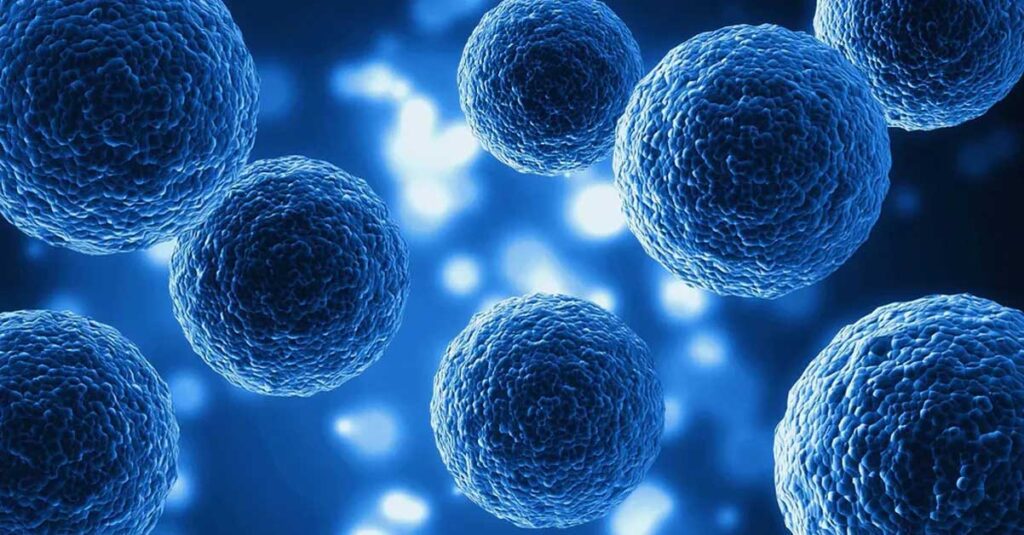
Exosomes are microscopic membrane-bound vesicles (tiny lipid sacs) that act as the sophisticated “delivery service” of the cellular world were discovered in the 1980s. They were first dismissed by scientists as mere cellular debris or “garbage bags” for metabolic waste.
Today we know that these tiny messengers carry a complex cargo of proteins, lipids, and genetic information between cells. Rather than being mere byproducts of cellular metabolism, these nanosized messengers are the architects of the body’s internal repair network. They play a pivotal role in everything from immune response to tissue repair, positioning them at the absolute forefront of modern targeted drug delivery, regenerative medicine, and regenerative aesthetics.
Exosomes act as powerful intercellular messengers that accelerate tissue repair, stimulate collagen production, and reduce inflammation. By delivering growth factors and genetic material, they offer a minimally invasive approach to skin rejuvenation, hair restoration, and enhanced wound healing following aesthetic procedures.
What Types of Exosomes Are There?
The “cargo” within an exosome is a reflection of its parent cell. That is why the source matters. These are the sources available today.
Mesenchymal Stem Cell (MSC) Exosomes
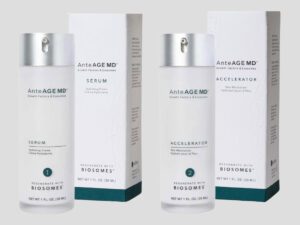
Mesenchymal (meh-suhng-kai-muhl) stem cell exosomes are the gold standard in regenerative aesthetics. They are typically derived from bone marrow (our AnteAGE products), adipose (fat) tissue (our BENEV products), and umbilical cord tissue (our AnteAGE products). They are highly prized for their anti-inflammatory and tissue-repair signals.
MSC exosomes are prized for their ability to act as a biological reset button for aging or compromised cells.
The Core Function: Immunomodulation and Repair
Unlike other cell types, MSCs are “multipotent,” meaning they are naturally designed to repair bone, cartilage, and connective tissue. Their exosomes carry this specific regenerative blueprint. Their primary roles include:
Anti-Inflammatory Signaling
They are exceptionally potent at “turning off” chronic low-grade inflammation (often referred to as “inflammaging”), which is a primary driver of skin aging.
Neocollagenesis
They deliver specific microRNA that instructs fibroblasts to increase the production of Type I and Type III collagen and elastin.
Cell Proliferation
They stimulate the migration and division of healthy cells to replace damaged ones, accelerating the turnover of the dermal layer.
Platelet-Derived Exosomes
Platelet-derived exosomes deliver proteins:
- PDGF (Platelet-Derived Growth Factor): Stimulates cell replication and collagen synthesis.
- VEGF (Vascular Endothelial Growth Factor): The primary driver for building new micro-capillaries.
- TGF-β (Transforming Growth Factor-beta): Vital for regulating the inflammatory response and tissue remodeling.
Plant-Derived Exosomes (PEVs)
While human-derived exosomes are the current “gold standard” for clinical repair, Plant-Derived Exosomes (more accurately called Plant Extracellular Vesicles or PEVs) are carving out a significant niche in the world of high-end, “clean” regenerative aesthetics.
The value of plant exosomes doesn’t lie in “rebuilding” human tissue (they lack the genetic keys to do), but in their role as superior delivery vehicles and antioxidant powerhouses.
Common Sources & Their Specific Benefits
| Plant Source | Primary Benefit | Scientific Mechanism |
|---|---|---|
| Centella Asiatica (Cica) | Advanced Healing | Stimulates Type I collagen synthesis and significantly calms “inflammaging.” |
| Panax Ginseng | Anti-Senescence | Rich in ginsenosides that protect dermal fibroblasts from oxidative stress and UV damage. |
| Rose Stem Cells | Barrier Repair | Enhances the skin’s lipid barrier function and improves long-term moisture retention. |
| Citrus (Grapefruit/Lemon) | Brightening | Carries specific plant-microRNA that can naturally inhibit melanin overproduction. |
| Aloe Vera | Deep Hydration | Activates the Nrf2 pathway, which is the body’s primary internal antioxidant defense system. |
Biosomes: The New Kid on the Block
What Exactly is a Biosome?
- Purity: They are stripped of “background noise” (cellular debris or non-functional proteins) that can sometimes be found in less refined exosome products.
- Potency: While a standard exosome solution might contain a few billion vesicles, a high-grade Biosome solution (like the AnteAGE MDX Biosome Solution) can contain upward of 25 billion active vesicles per vial.
Biosomes vs. Standard Exosomes
| Feature | Standard Exosomes | Biosomes (Next-Gen) |
|---|---|---|
| Vesicle Concentration | Typically 1–10 billion vesicles per vial. | High-potency; often 25 billion+ vesicles per vial. |
| Purification Level | Standard medical filtration of cellular debris. | Ultra-refined to eliminate “background noise” and inflammatory cytokines. |
| Primary Clinical Goal | General cellular communication and basic tissue repair. | Targeted structural remodeling and advanced neocollagenesis. |
| Signaling Profile | Broad-spectrum biological instructions. | Engineered for high-impact “instructional” payloads. |
| Downtime Reduction | Moderate reduction in post-procedure redness. | Rapid “inflammatory shut-off” for minimal social downtime. |
| Best Paired With | Standard microneedling or maintenance topicals. | High-energy treatments like Tixel or RF Microneedling. |
The Biosome Clinical Advantage
Which Exosome Products Does Rejuvience Med Spa Carry?
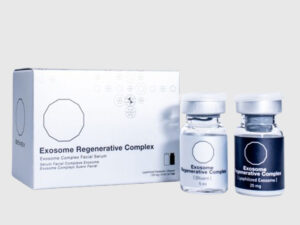
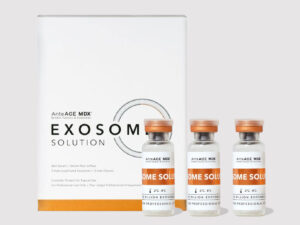
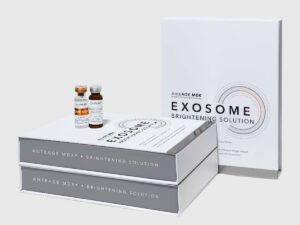
Rejuvience Med Spa in Scottsdale carries a variety of medical grade exosome and biosome skincare products. Some are dispensed as exosome therapy in-clinic, others are available for home care.
Exosome therapy is highly effective because it acts as a biological signaling system, delivering a concentrated “cargo” of growth factors, miRNAs, and proteins that reprogram aging or damaged cells toward a regenerative state.
Find out what’s possible with a complimentary consultation. There’s no cost, and there’s never any pressure.


What are exosomes and how do they function in intercellular communication?
Exosomes are small, lipid-bilayer extracellular vesicles (EVs), typically ranging from 30 to 150 nanometers in diameter. Unlike simple cellular waste, exosomes act as sophisticated “shuttles” that transport bioactive molecules including proteins, lipids, and nucleic acids (mRNA, miRNA).
They function by budding from the endosomal compartment of a donor cell and fusing with the membrane of a target cell. This process allows for the horizontal transfer of genetic information, influencing the physiological or pathological state of the recipient cell.
What are the primary benefits of exosome therapy in regenerative medicine?
Exosome therapy is emerging as a cell-free alternative to stem cell therapy. Because exosomes are non-replicating and have low immunogenicity, they offer several clinical advantages:
- Tissue Repair: They trigger regenerative signaling pathways that accelerate wound healing and skin rejuvenation.
- Anti-Inflammatory Effects: Exosomes can modulate the immune system, reducing chronic inflammation.
- Collagen Synthesis: In regenerative aesthetics, they are used to stimulate fibroblasts, increasing the production of collagen and elastin.
Are exosome treatments FDA-approved for anti-aging and hair loss?
Recent Exosome Science
Clinical Advances in Exosome-Based Therapies for Aesthetic Medicine: A Systematic Review and Meta-analysis of Human Clinical Trials
Stack ER, Spongberg C, Braud SC, Stanton WN, Elway M. . Aesthetic Surgery Journal. 2026 Mar 9;46(Supplement_1):S13-S25. doi: https://doi.org/10.1093/asj/sjaf178.
Abstract
Background: Exosomes have gained increasing attention in aesthetic medicine for their regenerative properties and role in skin and hair rejuvenation. By stimulating collagen production, delivering growth factors, and supporting follicle regeneration, they offer a novel, noninvasive approach to facial rejuvenation and hair growth.
Objectives: A systematic review and meta-analysis were conducted to evaluate the clinical efficacy of exosome therapies in aesthetic indications.
Methods: A comprehensive search of Medline, Embase, Cochrane, Trip Database, and ClinicalTrials.gov was performed on February 2, 2025. Eligible studies included human trials reporting outcomes on wrinkles, pigmentation, elasticity, skin texture, erythema, overall aesthetic improvement, hair density, or hair thickness.
Results: Thirty-nine studies were included: 26 focused on skin outcomes and 13 on hair outcomes. Meta-analyses were performed using random-effects models where percent improvement and standard error were available. Facial wrinkle reduction averaged 20.2% (95% CI, 15.3%-25.2%; P < .001). Additional skin-related outcomes improved by 14.7% to 23.4%, including pigmentation, elasticity, texture, erythema, and overall appearance. Hair density and thickness improved by 23.6% (95% CI, 18.1%-29.0%) and 18.0% (95% CI, 11.1%-24.9%), respectively. Nine ongoing clinical trials were identified across the United States, Iran, and China.
Conclusions: Although heterogeneity and nonstandardized protocols limit generalizability, findings indicate consistent, meaningful improvements in both skin and hair outcomes. These results support further investigation of exosome therapies as a regenerative modality in aesthetic medicine.
Level of Evidence: 3 (Therapeutic).
Exosomes for skin treatment: Therapeutic and cosmetic applications
Harsha Sreeraj, R. AnuKiruthika, K.S. Tamilselvi, D. Subha. (2024, December). Nano TransMed, Volume 3. https://doi.org/10.1016/j.ntm.2024.100048
Abstract
The therapeutic potential of exosomes, which are nano-sized extracellular vesicles derived from various cell types, has drawn substantial interest in the field of dermatology. Exosomes have distinctive capabilities, including facilitating intercellular communication, delivering bioactive molecules, and modulating immune responses, which make them promising candidates for skin regeneration, wound healing, and treating dermatological disorders.
Specifically, exosomes derived from the stem cells of mesenchymal and adipose cells have numerous applications in skin repair and regeneration. Exosomes also find expanded applications in treatments and therapies related to hair. Exosomes emit signals and growth factors that impact the activity of nearby epithelial cells, encouraging their growth, specialization, and the development of hair formations.
This review explores the efficacy of topical and transdermal applications of exosomes in skin and hair and highlights the transformative potential of exosome-based therapies in dermatology and paves the way for future research and clinical applications.
Scottsdale Regenerative Insider is the official blog of Rejuvience Med Spa. We believe in transparent, evidence-based aesthetics that utilize your body’s natural ability to heal and renew.
Get the Regenerative Edge! Receive our latest regenerative research and exclusive med spa offers directly to your inbox.
We respect your privacy. We never sell or share your personal information.