
Scottsdale Regenerative Insider
Collagen Peptides: Glycine First, Glow Later
Collagen peptides have become one of the most aggressively marketed supplements for aging skin. They’re marketed as “beauty from within” reducing wrinkles, improving skin elasticity, longer hair, and stronger nails. Those benefits are just the bonus, not the big reason collagen peptides have become a daily mainstay in my daily diet.
I want to be clear. Collagen peptides are not a magic pill. They will not erase deep wrinkles caused by age-related or rapid weight loss collagen loss. They will not give you thick, shiny hair and indestructible nails. Why? Because your hair and nails are primarily made of keratin, not collagen.
But they do deliver things important enough, powerful enough for me to make them an integral part of a nutrient-rich diet for maintaining overall health as I age. This is is what they are.
The Glycine Engine: Beyond Skin Deep
Collagen peptides are approximately 33% glycine. Glycine makes up about 35% of the amino acid structure in the collagen that keeps skin, joints, and connective tissues strong.
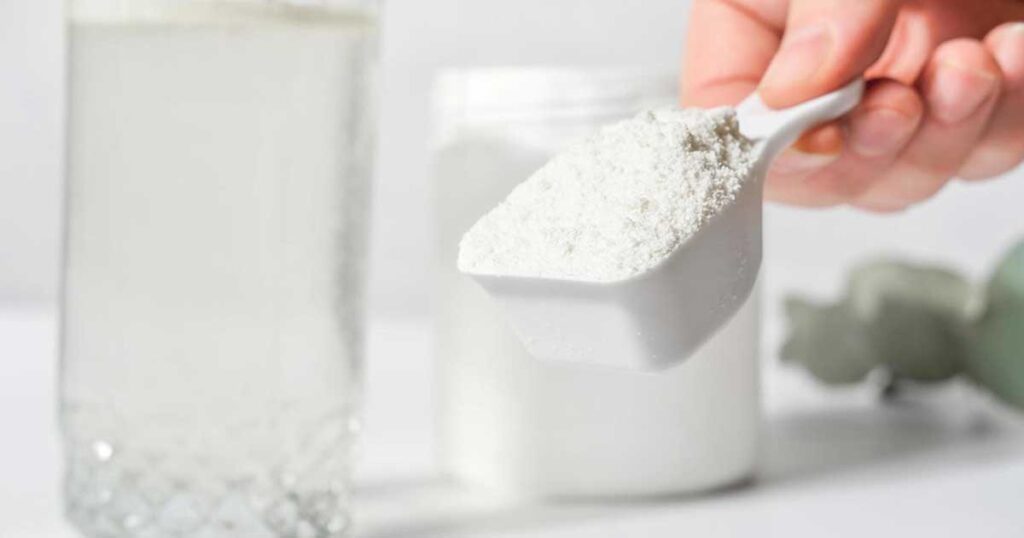
Glycine is considered a “non-essential” amino acid because your body can make it, however aging raises demand while the body’s ability to create it diminishes. When taking a functional daily dose of 20 grams of collagen peptides (about ¼ cup), it delivers between 4 and 5 grams of glycine. This supports:
- Glutathione Synthesis: Glycine is one of the three amino acids needed to produce glutathione, your body’s master antioxidant. Glutathione neutralizes oxidative stress, protecting cells from damage, and your body’s ability to create it diminishes with age. In this American Journal of Clinical Nutrition study, glutathione concentration rose by nearly 95 percent and oxidative stress markers dropped significantly.in elderly subjects who received two weeks of glycine and n-acetyl cysteine (NAC, available on in grocery supplement sections and Amazon).
- Joint Function: About 60% of cartilage is collagen by dry weight. Your needs high concentrations of circulating glycine to make it. A systematic review in journal Amino Acids found collagen peptide supplements improved joint discomfort, knee and ankle function, and recovery outcomes in several exercise and injury-related studies.
Glycine is also needed for creatine production, iron and oxygen transport, bile salts for digestion, DNA and cellular repair, and sleep.
Bone Density
This study in journal Nutrients found collagen peptides daily for 12 months produced measurable increases in bone mineral density, along with favorable shifts in bone formation markers. A four-year follow-up in the Journal of Bone Metabolism on the same cohort found study subjects had held their bone density gains.
The Protein Math Nobody Talks About
When people see the phrase “World Health Organization protein safe lower limit: 50 grams/day”, they tend to think 50 grams is their target. It’s not. The “safe lower limit” is the absolute minimum needed to prevent clinical deficiency and muscle wasting, a.k.a. malnutrition.
If you plug in your height, weight, sex, and activity level at https://www.calculator.net/protein-calculator.html, you’ll see the American Dietetic and CDC optimal ranges are double the World Health Organization safe lower limit or more. My optimal range is 100 to 135 grams a day and I am not a big person. That’s 5 to 6 servings of chicken every day, which is just a whole lot of food.
A 20-gram (¼ cup) dose of collagen peptides in my morning coffee provides roughly 18 grams of dietary protein. While collagen is an incomplete protein (it lacks tryptophan), that 18 grams helps me hit my optimal daily protein intake target that is so important for maintaining general health.
Why I Choose Bovine Collagen
I choose bovine collagen peptides because it provides both collagen Type I and Type III. It also happens to be more affordable (marine peptides are substantially more) and there are a good number of reputable brands to choose from.
Because plants don’t have connective tissue, natural dietary collagen is always an animal product. While there are 28 identified types of collagen in the human body, supplements typically deliver these three major types of collagen:
- Type I (Skin & Bone Structure): Makes up about 90% of your body’s total collagen. Provides strength and structure to skin, tendons, ligaments, bones, and teeth. Usually sourced from fish skin and scales, cow hides, and beef bone broth.
- Type II (Joint & Cartilage Support): Found mainly in elastic cartilage; cushions joints, absorbs impact, and supports overall joint mobility and flexibility. Usually sourced from chicken cartilage and chicken bone broth. Bovine collagen does not have Type II collagen, so I save chicken bones in the freezer and when I have enough, simmer them with vegetables for 24 hours in a crock pot to get occasional good size doses of Type II collagen RFF (real freakin’ food) style.
- Type III (Muscle & Organ Framework): Works alongside Type I to support structure in muscles, blood vessels, intestines, and hollow organs. Usually sourced alongside Type I from beef and pork connective tissues and organ meats.
Choosing grass-fed bovine collagen peptides helps eliminate the risk of trace exposures to synthetic hormones, antibiotics, or pesticide residues from the grain feed that might linger in conventional animal tissues.
Rejuvience Med Spa does not sell collagen protein products. Collagen petides have become a commodity, so I usually buy whichever quality brand is on sale. Vital Proteins, one of the oldest brands, is best known. Other reputable brands include Orgain, Naked Nutrition, Sports Research, and Great Lakes Wellness.
Great-looking skin after 50 is great-looking because it has better tissue function. Daily collagen peptides supply a concentrated glycine-rich protein that’s used throughout the body for building the collagen that improves skin density, improves skin hydration and elasticity, and softens fine lines, and that’s the bonus.
Collagen peptides provide useful nutritional building blocks, but they’re only one part of great-looking healthy skin as you age. There comes a point where maintaining optimal skin firmness, smoothness, and skin barrier quality really does take professional treatments.
If you’re curious about which professional treatments might be best to address age 45+ skin concerns, especially if topicals just aren’t cutting it anymore, schedule a complimentary consultation. There’s no pressure, and there’s never any obligation. If you know what you’re looking for, be sure to check out our current med spa specials.
Scottsdale Regenerative Insider is the official blog of Rejuvience Med Spa. We believe in transparent, evidence-based aesthetics that utilize your body’s natural ability to heal and renew.
Get the Regenerative Edge! Receive our latest regenerative research and exclusive med spa offers directly to your inbox.
We respect your privacy. We never sell or share your personal information.