
Skin Tightening Scottsdale: What Actually Works?
Search for skin tightening in Scottsdale and you’ll find no shortage of treatments or promises.
Radiofrequency. Ultrasound. RF microneedling. Fractional resurfacing. Exosomes. Fillers. Every technology claims to tighten skin, stimulate collagen, and restore a youthful appearance. Some practices even market multiple technologies as if they are completely interchangeable.
They aren’t.
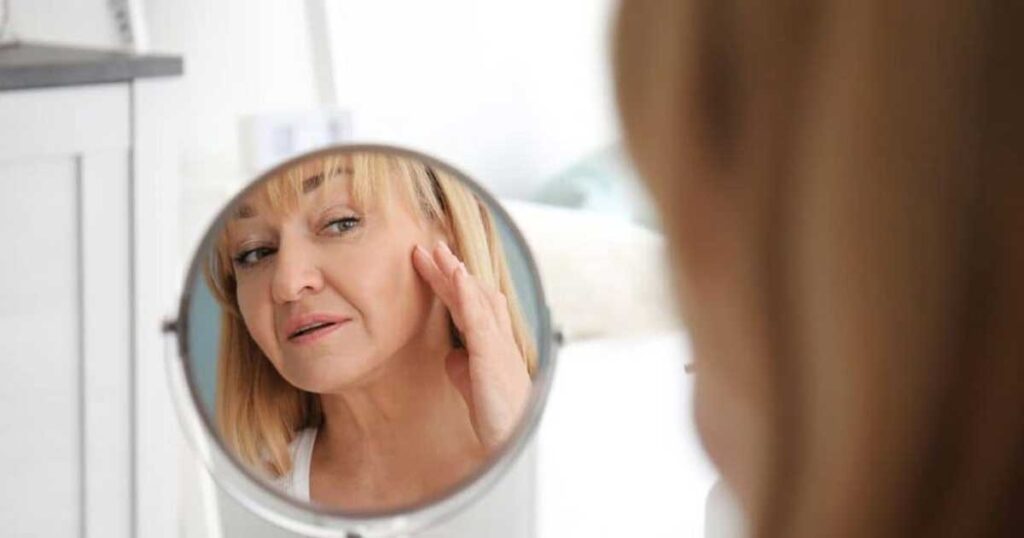
Each technology addresses a different aspect of skin aging. Some improve the skin’s structural support. Others improve texture or pigmentation. Some replace lost volume. Others create controlled injuries designed to stimulate your body’s natural repair mechanisms.
The challenge for people isn’t finding treatments. It’s understanding what each treatment does.
If you’re over 50, that distinction matters more than ever.
The biology of aging skin changes dramatically after menopause and for men, as testosterone declines. Collagen production slows. Elastin fibers fragment. The skin barrier becomes thinner. Healing takes longer. Treatments that delivered excellent results in your forties may produce very different outcomes a decade later.
The good news is that non-surgical skin tightening has advanced significantly over the past several years. Today’s best treatments are shifting away from simply creating damage and toward stimulating healthier tissue repair.
Understanding those differences is the first step toward making an informed decision.
Skin Tightening Begins Below the Surface
Loose skin isn’t caused by wrinkles alone. As we age, several structural changes occur simultaneously.
Collagen, the primary protein responsible for skin strength, declines by approximately one percent each year beginning in early adulthood. As we age, elastin, the protein that allows skin to stretch and recoil, also becomes fragmented and cannot be replaced as readily as collagen.
At the same time, facial fat compartments shrink and shift. Bone slowly remodels. The skin barrier becomes thinner and less resilient. Decades of ultraviolet exposure further weaken collagen through a process known as photoaging.
The result is skin that feels thinner, softer, and less able to resist gravity. No cream can reverse these structural changes. Meaningful skin tightening requires stimulating biological repair beneath the surface.
That is why most modern skin tightening treatments rely on controlled thermal or mechanical injury. The goal is not to damage the skin. The goal is to encourage fibroblasts to build new collagen and elastin while remodeling aging tissue into stronger, more organized support.
The question isn’t whether collagen can be stimulated. It can. The question is how to do it safely, predictably, and appropriately for aging skin.
DENSITY Radiofrequency: Heating the Right Tissue at the Right Depth
Radiofrequency has become one of the most widely used technologies for non-surgical skin tightening because heat is a powerful stimulus for collagen remodeling.
Not all radiofrequency systems, however, are created equal.
Older devices often treated a single tissue depth or required high energy levels that compromised comfort without necessarily improving results.
Unlike purely monopolar radiofrequency systems like Thermage or XERF, the DENSITY combines both monopolar and bipolar RF in a single, sequential pulse. This allows the treatment to simultaneously target the deep structural layers for a lifting effect while instantly smoothing the skin’s surface texture.
This matters because collagen remodeling depends on achieving and maintaining temperatures high enough to stimulate fibroblasts without overheating surrounding tissue.
Radiofrequency skin tightening treatments don’t produce an overnight facelift. Instead, they stimulate fibroblasts to start a deep remodeling process that continues for up to six months as new collagen and elastin develop.
People often notice an early feeling of firmness immediately after treatment as existing collagen fibers contract, followed by gradual improvements in skin firmness, elasticity, and contour as remodeling progresses.
Unlike treatments designed primarily to improve the skin’s surface, radiofrequency addresses changes occurring deeper within the dermal layer where fibroblasts live and collagen loss contributes directly to skin laxity.
For 50+ skin, DENSITY RF is particularly effective in areas where mild to moderate skin laxity has become noticeable, including the jawline, lower face, neck, and around the mouth. Our Crepey Arm Skin Rescue combines the DENSITY with Procell Microchanneling to effectively restore skin barrier smoothness, thickness, resilience, and overall health.
Ultrasound Skin Tightening: Effective Technology with Important Caveats
High-intensity focused ultrasound occupies a different category of skin tightening technology.
Rather than heating broad areas of tissue, ultrasound concentrates energy at specific depths beneath the skin. The goal is to create tiny zones of thermal injury that stimulate collagen production within deeper structural tissues while leaving the skin surface largely unaffected.
For appropriately selected people, ultrasound can improve mild skin laxity in the brow, lower face, jawline, and neck.
Unlike radiofrequency, however, ultrasound treatments are highly operator dependent.
Treatment planning requires a detailed understanding of facial anatomy. Energy delivered too superficially may fail to achieve meaningful tightening. Energy delivered too deeply or inappropriately may increase the risk of unwanted complications.
Published case reports have described adverse outcomes including prolonged pain, temporary nerve injury, and unintended facial fat loss in susceptible individuals. While these events are uncommon, they illustrate why provider experience matters as much as the technology itself.
People should also understand that not every ultrasound device marketed internationally has undergone FDA clearance for aesthetic use in the United States. Choosing an FDA-cleared system operated by a properly trained clinician provides an additional layer of confidence that the device has been evaluated for its intended indication.
Ultrasound remains a valuable option for selected people, but it is not automatically the best choice for every face. Individuals with naturally thin facial fat pads or advanced volume loss may require a different strategy to avoid emphasizing skeletal contours rather than improving them.
Technology alone does not determine outcomes.
The experience of the provider, careful patient selection, and realistic expectations are equally important.
Fractional Skin Resurfacing: Tighter Skin Starts with Better Skin Quality
When people talk about skin tightening, they often overlook the foundation of great-looking skin: skin quality.
Rough texture, enlarged pores, fine lines, crepey skin, and years of sun damage don’t necessarily mean the skin is loose. They reflect changes within the skin’s surface and upper dermal layer that reduce its ability to reflect light evenly and maintain a smooth appearance.
Fractional resurfacing addresses those changes by creating thousands of microscopic treatment zones surrounded by healthy tissue. Those untreated areas accelerate healing while the treated zones stimulate new collagen production and healthier skin remodeling.
Unlike older fully ablative lasers that removed the entire surface of the skin and required weeks of recovery, modern fractional technologies are not limited to lasers. Fractional treatments create controlled injuries on only a fraction of the skin during each session. This significantly speeds healing and reduces downtime while delivering visible improvements in texture and firmness.
At Rejuvience Med Spa, two fractional skin resurfacing technologies play complementary roles: Venus Viva and Tixel.
Both stimulate collagen. Both improve skin quality. Neither should be confused with traditional surgical lifting procedures.
Venus Viva: Fractional Radiofrequency Resurfacing
Venus Viva combines fractional radiofrequency with an array of tiny pins that create controlled micro-injuries while delivering heat beneath the skin’s surface. The treatment improves texture and stimulates collagen remodeling simultaneously.
For aging skin, the Venus Viva is particularly effective for concerns that often accompany skin laxity, including:
- Rough texture
- Fine lines
- Enlarged pores
- Acne and surgical scars
- Sun-damaged skin
- Crepey skin
Because the treatment targets only microscopic treatment zones, healing is significantly faster than traditional fully ablative laser resurfacing while still producing noticeable improvements in skin quality.
For those over 50, improving the skin’s surface quality makes the skin appear firmer even before significant collagen remodeling occurs.
Tixel: Thermal Resurfacing Without a Laser
Although frequently grouped with lasers, Tixel uses an entirely different technology.
Instead of light energy, Tixel transfers precise thermal energy from a heated titanium tip to the skin. The result is thousands of microscopic coagulation zones that stimulate collagen remodeling while preserving surrounding tissue.
One of Tixel’s greatest advantages is its ability to safely treat delicate areas that are challenging for many energy-based devices.
This includes:
- Hooded upper eyelids
- Crow’s feet
- Under-eye crepiness
- Fine lines around the lips
- Thin, aging skin
The Tixel non-surgical eye lift is effective for treating mild to moderate eyelid hooding, crow’s feet, under eye darkness, and under-eye bags (festoons). In 2025, the Tixel technology was FDA cleared for treating symptoms of dry eye disease. It is the only energy device that can safely treat to the lash line without requiring eye shields that can scratch corneas.
Like Venus Viva, Tixel improves skin quality rather than creating dramatic lifting.
Microchanneling: Stimulating Repair With Less Trauma
Collagen induction therapy has become one of the most popular procedures in aesthetics. Unfortunately, the term “microneedling” is often used to describe several different procedures that are not biologically equivalent.
Procell microchanneling creates precise, uniform channels that stimulate the skin’s natural repair response while minimizing unnecessary tissue trauma.
Science tells us that microchanneling is better than microneedling for age 50+ skin. As collagen declines and the skin barrier becomes thinner, and takes longer to recover. Microneedling microinjuires include lateral dragging and tearing patterns while microchanneling creates clean columns that serve as excellent channels for in-officetopicals. Microneedling results in more inflammation and tissue damage, and more injury does not produce better outcomes in 50+ skin.
The objective is not to overwhelm the skin. The objective is to create a smarter healing response. Microchanneling delivers.
Radiofrequency Microneedling: More Energy Is Not Always Better
Radiofrequency microneedling combines two technologies: needles that penetrate the skin and radiofrequency energy delivered through those needles into the dermis.
The procedure can improve acne scars, wrinkles, and mild skin laxity. However, the addition of radio frequency’s thermal energy also increases the potential for complications compared with mechanical collagen induction alone.
In October 2025, the U.S. Food and Drug Administration issued a Safety Communication warning consumers and providers about potential risks associated with certain uses of radiofrequency microneedling devices. Reported adverse events included burns, scarring, prolonged pigment changes, nerve injury, fat loss, and disfigurement requiring surgical correction. The FDA emphasized that these risks may increase when devices are used outside their cleared indications or by inadequately trained operators.
These reports do not mean radiofrequency microneedling should never be performed. They do underscore the importance of selecting an experienced provider using FDA-cleared equipment for appropriate indications.
For those over 50 with naturally thinner skin and reduced subcutaneous fat, treatment planning becomes particularly important. More energy is not necessarily better.
The goal is improved skin quality, not unnecessary tissue injury.
Bioactive Regenerative Topicals: Improving the Healing Environment
One of the most exciting developments in regenerative aesthetics is not another device. It is the bioactive regenerative topicals that are applied during and after the procedure.
These bioactives enter the skin through micro-channels created by treatments to deliver an explicit command: stop degrading and start rebuilding structural proteins.
Professional bioactive regenerative formulations include combinations of exosomes, growth factors, peptides, amino acids, cytokines, vitamins, and PDRN (polydeoxyribonucleotide). They don’t tighten skin directly. Instead, these powerful molecules signal cells to decrease inflammation, increase collagen and elastin production, and help improve intercellular communication for overall better cellular function.
The result is improved skin firmness, smoothness, and a healthier glow.
Fillers Restore Volume. They Do Not Tighten Skin.
One of the biggest misconceptions in aesthetic medicine is that fillers tighten loose skin. They don’t.
Dermal fillers restore volume lost through aging. They can soften deep folds, improve facial contours, and replace volume in areas such as the cheeks or temples.
They do not strengthen collagen, improve skin elasticity, or reverse skin laxity. Filler complications have been receiving increasing attention over the last few years.
- Documented risks include:
- Migration from the original injection site
- Chronic swelling
- Nodule formation
- Delayed inflammatory reactions
- Vascular occlusion
- Skin necrosis
- Blindness from accidental vascular injection, although rare
- Persistence of hyaluronic acid fillers much longer than originally believed
For those whose primary concern is loose skin rather than volume loss, regenerative collagen stimulation often addresses the underlying problem more directly.
Comparison of Non-Surgical Skin Tightening Treatments
| Treatment | Primary Action | Tightens Skin? | Typical Downtime | Average Scottsdale Cost (2026) |
|---|---|---|---|---|
| DENSITY RF | Deep collagen remodeling | Excellent for mild to moderate laxity | None | $1,100-$1,400 full face |
| Thermage | Deep volumetric monopolar RF heating | Good for mild to moderate laxity | None | $2,600-$3,800 full face |
| XERF | Multifrequency monopolar RF tightening | Good for mild to moderate laxity | None | $2,000-$2,200 full face |
| Ultrasound | Deep focused collagen stimulation | Good in selected patients | None to mild soreness | $2,000-$4,500 full face |
| Venus Viva | Fractional resurfacing and collagen stimulation | Mild tightening through improved skin quality | 2-5 days | $550-$1,000 full face |
| Tixel | Thermal resurfacing | Mild tightening with excellent texture improvement | 2-5 days | $299-$900 eyes; $699-$1,500 face |
| Microchanneling with Exosomes | Mechanical collagen induction | Mild tightening through collagen stimulation | 24-48 hours | $550-$700 full face |
| RF Microneedling | Needling plus thermal collagen stimulation | Moderate tightening | 3-7 days | $700-$1,500 full face |
| Bioactive Regenerative Topicals | Support tissue repair | No, adjunctive therapy | None | $100-$400 add-on |
| Dermal Fillers | Restore volume | No | Minimal | $700-$1,000 per syringe |
Which Skin Tightening Treatment Actually Works?
The answer depends on what you mean by skin tightening.
- If your primary concern is loose skin, technologies that remodel collagen at depth, such as DENSITY RF or carefully selected ultrasound treatments, are generally the most appropriate options.
- If your concern is crepey skin, rough texture, or years of sun damage, fractional resurfacing with Venus Viva or Tixel often produces more noticeable improvements.
- If your goal is improving overall skin quality while encouraging natural collagen production, microchanneling combined with professional regenerative topicals offers an elegant, biologically driven approach.
And if your concern is volume loss, fillers may still play a role. Just don’t mistake restored volume for tighter skin.
The Future of Skin Tightening Is Regenerative
For decades, aesthetic medicine focused on covering wrinkles, filling hollow areas, or surgically removing excess skin.
Today’s regenerative approach asks a better question. “How can we help aging skin function more like younger skin?” That shift changes everything.
Instead of chasing the latest device, regenerative aesthetics focuses on selecting technologies that encourage healthier collagen remodeling, improve skin quality, strengthen the skin barrier, and support your body’s natural repair mechanisms.
There is no single “best” skin tightening treatment. There is only the treatment that best matches how your skin is aging.
For those 50+, that personalized approach consistently produces results that look natural because they are built on healthier skin, not simply tighter skin.
Ready to naturally lift, firm, and rebuild your skin from the inside out? Book a complimentary consultation to find out what today’s regenerative aesthetic technology can do. There’s no cost, and there’s never any obligation.