
Scottsdale Regenerative Insider
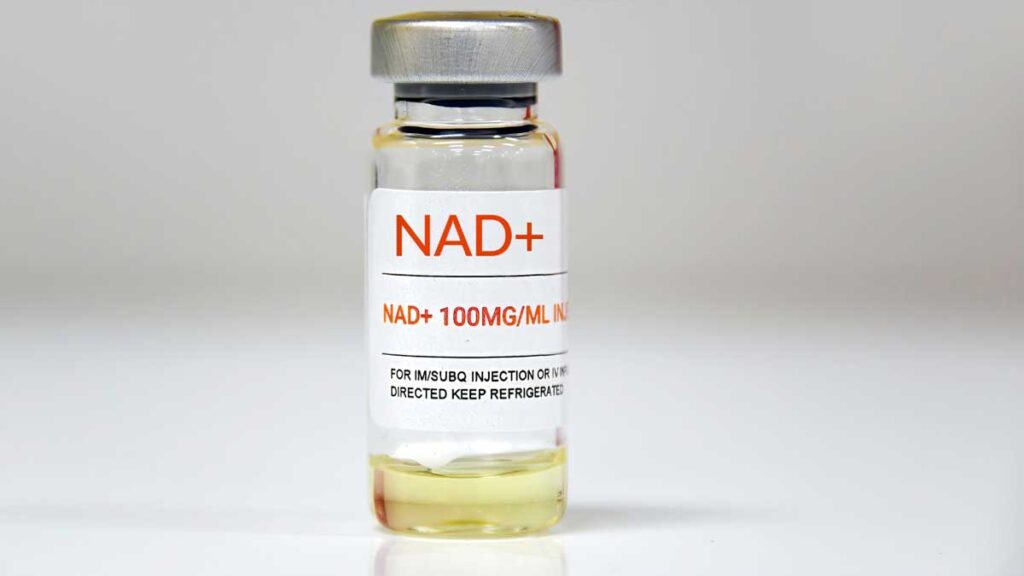
NAD+ Therapy: What to Know Before You Inject
NAD+ has become one of the most hyped “longevity” tools in wellness clinics, especially in Scottsdale. But the science behind injecting or infusing NAD+ is far more complicated than the marketing suggests.
Here’s what the research actually shows, and why many experts are urging caution.
NAD (Nicotinamide Adenine Dinucleotide) is one of the most important molecules in the human body because it is drives cellular energy production (converting food into ATP), DNA repair, and metabolic function.
Levels naturally decline with age; by middle age, our NAD+ levels plummeted by half. The decline progresses into old age. contributing to fatigue, metabolic issues, inflammation, and other hallmarks of aging.
NAD+ supplements and Nicotinamide Riboside (NR) emerged commercially around the mid-2010s. In the mid-2020s, NAD+ intravenous (IV) therapy and NAD+ injections became a wellness phenomenon marketed for energy, longevity, recovery, and regenerative health.
NAD+, NR, and and direct NAD+ via injections function differently, each with important considerations. Here’s what you need to know to make a better informed decision.
About NAD+ and Longevity
NAD+ IVs were first used in the 1960s as an experimental treatment for drug and alcohol withdrawal. In 2016, Dr. Shin-ichiro Imai’s groundbreaking research at Washington University School of Medicine (shifted the global conversation on longevity (see https://pmc.ncbi.nlm.nih.gov/articles/PMC7238909/). Imai proved that age-related cellular decline is not entirely permanent and can be countered by supplementing with NAD+ precursors, specifically Nicotinamide Mononucleotide (NMN).
The results caught global media attention because the NMN-treated mice experienced remarkable systemic benefits:
- Enhanced physical activity and improved skeletal muscle function.
- Improved eye function and bone density.
- Suppressed age-associated weight gain without a loss of appetite.
- Zero obvious side effects or toxicity, making oral precursors look exceptionally safe.
In 2020, Christopher Shade published a review that established Nicotinamide Mononucleotide (NMN) as a highly stable, reliable, and effective precursor for boosting Nicotinamide Adenine Dinucleotide (NAD+) levels (see https://pmc.ncbi.nlm.nih.gov/articles/PMC7238909/ ).
Key takeaways from this paper for NAD+ supplements include:
- Direct NAD+ Biosynthesis: It validates that supplementing with NMN successfully raises NAD+ levels in the body, which decline naturally with age.
- Reversal of Age-Related Decline: The review highlights preclinical evidence showing that NMN can suppress tissue inflammation, enhance insulin secretion, and improve mitochondrial and neuronal function.
- Safety and Stability: It builds the foundation for the oral supplementation of NMN, confirming its stability and pharmacokinetic viability as an anti-aging and metabolic health supplemen
Shade’s paper served as commercial and scientific catalyst for the NAD+ industry, accelerating the transition of NMN from a specialized research chemical into a mainstream consumer supplement. It validated oral delivery mechanisms, popularized liposomal technology to enhance bioavailability, and helped shift market dominance toward NMN by providing the scientific justification for its efficacy.
The NAD+ supplement market has evolved into a segmented landscape separating daily oral precursors like NMN and NR for steady maintenance from high-impact, direct-to-bloodstream interventions such as injections and IV therapy. Making an informed decision about which is best for you requires understanding the mechanisms of each.
About Oral NR and NMN Mechanisms
The NR Mechanism
NR is a small, uncharged form of Vitamin B3 that enters cells via the cellular salvage pathway.
- Cellular Uptake: Because of its small molecular size, NR passes directly through cell membranes using standard equilibrative nucleoside transporters (ENTs).
- Intracellular Conversion: Once inside the cell’s cytoplasm, NR undergoes a two-step transformation to become NAD⁺:
- The enzyme Nicotinamide Riboside Kinase (NRK1 or NRK2) phosphorylates NR, turning it into NMN.
- The enzyme NMN Adenylyltransferase (NMNAT) then converts that NMN into functional NAD⁺, a step requiring 1 molecule of ATP.
The NMN Mechanism
NMN is structurally identical to NR but possesses an added phosphate group, making it a larger, negatively charged molecule.
- Cellular Uptake: Because of its phosphate group, NMN cannot freely diffuse across most cell membranes. It enters cells via two primary routes:
- The Dephosphorylation Route: Extracellular enzymes (such as CD73) strip the phosphate group off NMN, turning it back into NR. It then enters the cell via ENT transporters and is re-phosphorylated into NMN.
- The Direct Route: In specific tissues (like the small intestine and lining of the blood vessels), NMN utilizes a dedicated transporter called Slc12a8 to enter the cell intact.
- Intracellular Conversion: Once inside the cell, NMN bypasses the NRK enzyme bottleneck. It requires only a single enzymatic step to generate NAD⁺, making it the immediate biochemical precursor.
NR is considered more efficient at a systemic level due to several biological, structural, and physiological factors:
1. NR’s Cellular Entry Advantage (No Extra Breakdown Step)
The cell membrane acts as a strict barrier. Because NMN possesses an inherent phosphate group, it is a larger, negatively charged molecule that cannot freely cross into most cells.
- The Inefficiency: To get inside most peripheral tissues, orally ingested NMN must first be broken down by extracellular enzymes (like CD73) to strip its phosphate group away, turning it back into NR. Only then can it enter.
- NR’s Direct Route: NR is smaller and uncharged. It bypasses this cellular bottleneck entirely, passing straight through cell membranes via widely available equilibrative nucleoside transporters (ENTs) without needing any preliminary breakdown.
2. Lower Molecular Weight (More Value Per Gram)
From a pure mass perspective, NMN is physically heavier than NR due to that added phosphate group.
- A 500 mg dose of NR provides a higher total number of raw molecules (molar equivalents) than a 500 mg dose of NMN.
- Part of the physical mass you swallow with NMN consists of the phosphate group, which gets detached during digestion anyway.
3. Dual Mechanism: Boosting Production While Inhibiting Loss
Efficiency is not just about creating NAD⁺; it is also about keeping it from being destroyed.
- As the body ages, an enzyme called CD38 increases. CD38 is a massive consumer of NAD⁺, effectively acting like a leak in a bucket.
- Emerging clinical science indicates that NR actively helps inhibit CD38 activity, which simultaneously protects existing NAD⁺ pools from being degraded. NMN does not exhibit this same preservation effect.
4. What Head-to-Head Human Studies Show
While earlier animal models favored NMN, rigorous independent human clinical trials reveal that NR frequently outperforms NMN in direct comparisons:
- In an independent, peer-reviewed human crossover study published in iScience, identical human participants were given the same high dose (1,200 mg/day) of both precursors under identical conditions.
- The Results: NR increased blood NAD⁺ levels by 161%, whereas NMN only increased them by 67%, giving NR a 2.3-fold efficacy advantage in whole-blood accumulation (see https://www.truniagen.com/blogs/tru-niagen-labs/nr-vs-nmn-head-to-head-study).
Dosage Considerations for NR and NMN
Nicotinamide Riboside (NR)
- Everyday Wellness: 250–300 mg per day is the most common starting dose and reliably boosts NAD+ levels.
- Optimized Support: Many users and studies move to 500–1,000 mg daily (split into morning and evening doses).
- Higher Range: Clinical trials have safely tested up to 2,000 mg per day, with stronger NAD+ increases at these levels.
Nicotinamide Mononucleotide (NMN)
- Everyday Wellness: 250–500 mg per day, often taken in the morning.
- Performance & Longevity: 600–1,200 mg per day is frequently used in studies showing noticeable benefits for energy and metabolism.
Special Considerations for Athletes
- Begin with 250 mg of either NR or NMN for 1 to 2 weeks to assess tolerance.
- Take in the morning (or split doses) to align with your body’s natural rhythms.
- Combine with regular exercise for amplified results.
- Stay consistent; benefits typically build over 4 to 8 weeks.
Mechanisms of Direct NAD+ via IV or Injection: Why It’s Not as Straightforward as It Seems
Direct NAD+ delivered through intravenous (IV) infusions or injections aims to bypass digestion for immediate bloodstream access. However, this approach has unique biological challenges that can limit effectiveness and introduce unwanted effects. Unlike oral precursors (NR or NMN), which the body naturally converts and regulates, direct NAD+ floods the system in a form that cells don’t readily absorb intact.
How Direct NAD+ Works (or Doesn’t)
Under normal conditions, extracellular (outside the cell) NAD+ levels stay very low, typically 0.1–0.5 μM.
When NAD+ is delivered directly via IV or injection, it creates a sudden and unnatural surge in extracellular NAD+ (the form circulating outside your cells), flooding the bloodstream with a molecule the body usually keeps tightly regulated inside cells.
The immune system interprets this excess free NAD+ as a damage-associated molecular pattern (DAMP), essentially a “danger signal” similar to molecules released during tissue injury, infection, or cell death. This triggers an innate immune response designed to alert and mobilize defenses.
How Extracellular Oversaturation Can Provoke Inflammation
Extracellular NAD+ often acts as a damage-associated molecular pattern (DAMP) or “danger signal,” similar to molecules released during cell injury or stress. The immune system interprets it as a threat, activating pro-inflammatory pathways. This can lead to:
- Acute inflammatory spikes: Studies show increases in white blood cell counts, neutrophils, and markers like hs-CRP (sometimes 3- to 10-fold in a majority of patients).
- Common side effects during or after infusion: Flushing, nausea, chest tightness/pressure, headache, abdominal cramping, dizziness, muscle discomfort, and gastrointestinal issues. These are often tied to infusion rate and can be severe enough to require slowing or pausing the drip.
- Other potential issues: Vein irritation, infection at the IV site, allergic reactions, temporary changes in heart rate or blood pressure, and in rarer cases, oxidative stress or shifts in glucose handling.
How the Inflammatory Cascade Happens
- Receptor Activation: Extracellular NAD+ engages purinergic receptors (such as P2X7 and others) on immune cells like neutrophils, macrophages, and T cells. This leads to calcium influx, activation of pro-inflammatory pathways, and release of cytokines.
- Marker Spikes: Clinical observations show rapid increases in inflammation markers, including white blood cell counts, neutrophils, and high-sensitivity C-reactive protein (hs-CRP), which can rise 3- to 10-fold in many patients after NAD+ IV sessions.
- Common Symptoms: The resulting acute response often manifests as flushing, chest tightness, nausea, headache, abdominal cramping, dizziness, and muscle discomfort during or right after infusion. These effects are frequently dose-rate dependent and can force clinicians to slow or pause the drip.
While intracellular NAD+ (inside cells) generally supports restorative processes like energy production, DNA repair, and sirtuin activity, the extracellular oversaturation created by direct IV delivery can shift the balance toward short-term pro-inflammatory signaling rather than pure repair.
Which NAD+ Supplement is Best?
Oral precursors like NR and NMN allow the body to gradually increase NAD+ through natural salvage pathways, raising intracellular levels without triggering the same extracellular danger signals. This makes them a gentler, more regulated option for most people seeking sustained support without the inflammatory rebound.
Direct NAD+ via IV or injection casues extracellular oversaturation, which can shift the balance toward short-term pro-inflammatory signaling rather than pure repair. Much of the infused NAD+ is also rapidly broken down outside cells into precursors anyway, so the inflammatory “alarm” may occur without proportional long-term intracellular benefits. Regular use should include regular screening for inflammation markers.
If you’re considering any form of NAD+ therapy, discuss these mechanisms with a knowledgeable healthcare provider so that you can make the best informed decision.
Ready to explore learn possible?
At the forefront of today’s advancements is regenerative aesthetics, a sophisticated blend of longevity science, cellular optimization, and aesthetic medicine designed to deliver age repair so you can look, feel, and perform at your best from the inside out. We invite you to book a complimentary consultation to learn what’s possible with today’s most advanced skin rejuvenation technology.
Scottsdale Regenerative Insider is the official blog of Rejuvience Med Spa. We believe in transparent, evidence-based aesthetics that utilize your body’s natural ability to heal and renew.
Get the Regenerative Edge! Receive our latest regenerative research and exclusive med spa offers directly to your inbox.
We respect your privacy. We never sell or share your personal information.